
I've spent a lot of time in carpeted cubicle environments doing Wi-Fi site surveys, and I've spent a lot of time in warehouses doing the same thing. They are not the same job. If you're used to office buildings and you're about to walk into your first big-box warehouse survey, here's what I wish someone had told me.
The environment itself is the challenge
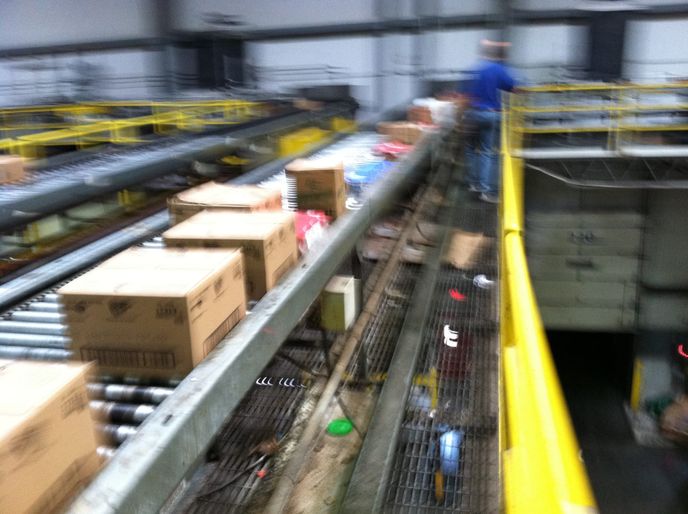
Warehouses swing between temperature extremes that an office never sees — desert heat on one side of the building, a frozen food storage area on the other. Ceiling heights can run from 30 to 35 feet, sometimes with mezzanines (floors within floors) built out of open metal grating that plays havoc with RF. And depending on the client, you might also need outdoor Wi-Fi to track a fleet of trucks moving around the yard. None of that shows up in a typical office survey.
Do your homework before you get on the plane
The kickoff call is non-negotiable. Use it to find out what PPE you'll need — hard hat, steel-toed shoes, a high-viz vest, sometimes anti-static gear. Find out if you need to rent (and get certified to drive) a scissor lift or cherry picker to reach where the APs will actually be mounted, because it's not going to be a ladder job. Bring a laser measuring tool so your floor plan scale is based on the longest hallway you can find, not a three-foot doorway. And double-check that your survey software is actually capturing spectrum analysis data — you don't want to make the trip twice.
Know your client devices
Office surveys assume laptops and phones. Warehouses run barcode scanners, picking wearables, and voice-directed command systems, each with its own often-mediocre Wi-Fi chipset. Design for the least capable, most common device on the floor. Forklifts add another wrinkle: they move fast down long aisles, which means frequent roaming, and their antennas are sometimes buried inside metal enclosures or blocked by the driver. Ask the customer whether the racks themselves move — seasonally rearranged racks and constantly changing inventory both affect how reliable your design needs to be.
Antenna choices get more interesting
Carpeted cubicles mean omnidirectional antennas on a suspended ceiling grid, full stop. Warehouses open up directional antennas mounted at the ends of aisles or above them, suspended mounting systems on chains or springs that flex instead of snap when a forklift clips them, and Yagi antennas for point-to-point links to a remote guard shack or building where running conduit isn't worth the cost.
Mounting, weather, and the outdoors
I-beams are everywhere in warehouses, and there's a whole ecosystem of off-the-shelf clamps and mounts built for them — use it. Outdoors, skip zip ties (UV breaks them down) in favor of metal banding straps, add a lightning arrester if you're anywhere that gets thunderstorms, and always build in a drip loop on antenna cabling. If the roof is a non-penetrating membrane roof, don't drill it. Use a non-penetrating mount weighted with cinder blocks instead. And don't forget to check whether refrigerated storage areas are in scope; if they are, you'll need access points rated (or enclosed and heated) for freezer temperatures.
The takeaways that actually save you time
Always attend the kickoff call, or at least get your questions answered ahead of it. Charge your rented scissor lift overnight. A dead battery has cost me an entire day of survey time before. Sketch your installations by hand before you order parts; it's the easiest way to catch a connector mismatch before it delays an install. And if on-site safety training is required, budget the extra 45 minutes to an hour so it doesn't eat into your survey time.
Warehouse surveys reward the people who plan for the physical reality of the space, not just the RF. Get the logistics right and the wireless design gets a lot easier.
— Jennifer Huber, CWNE #51