
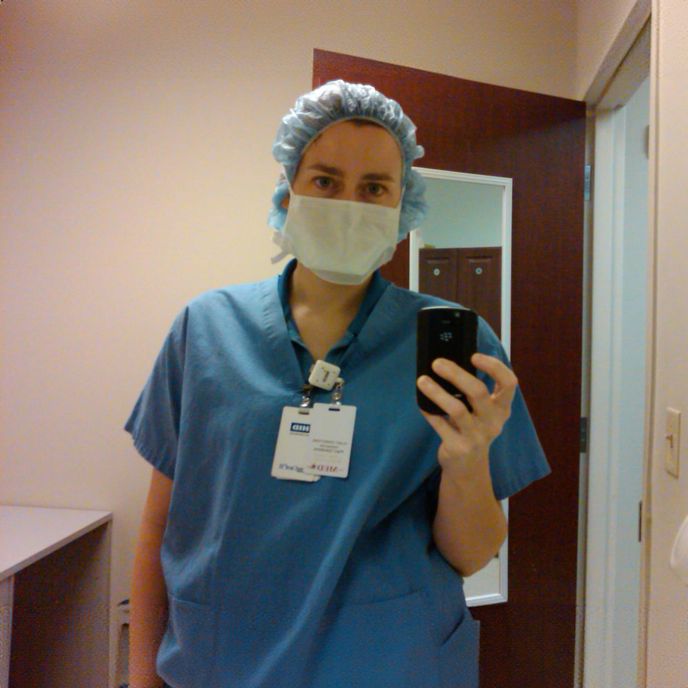
Healthcare facilities are, hands down, some of the most logistically demanding environments I've surveyed. Nothing about the RF itself is exotic. It's everything around the RF that will eat your schedule if you don't plan for it. Here's what I've learned doing Wi-Fi surveys in hospitals.
Start the kickoff call with logistics, not RF
Before you ever get on a plane, use the kickoff call to nail down parking (some hospitals have a specific vendor lot or require a permit), your site escort and site contact information, and who to call in security if you need a set of keys. Also ask about vaccination requirements. I've personally had a survey delayed for days because I couldn't produce written proof I'd had chicken pox as a kid and needed the vaccine before I could get on site. Ask early.
A site escort is worth more than you'd think
A good site escort is usually someone the entire hospital already recognizes, which means you skip most of the "who are you and what are you doing" conversations. They can unlock doors, hold them open, and field questions from staff while you keep working. Without one, you're relying on hospital security to sign out keys or unlock doors as you go, and that takes time out of your survey window. Either way: always knock and announce yourself before entering a room. It's about patient privacy, infection control, and not walking into the middle of a clinical procedure.
PPE and access will slow you down. Budget for it
Surgical suites, labor and delivery, and the lab all require PPE before you can enter: gowns, hair bonnets, booties, gloves, masks. Putting it on takes real time, so plan to survey all the PPE-required areas in one pass rather than gowning up repeatedly. Patient isolation rooms and negative pressure rooms are best surveyed when the patient is out — coordinate with the head nurse to find a window. And yes, you'll probably need to survey the morgue too. It's usually just an empty room, but be ready for it.
Watch for the environmental clues
Old plastic cable raceway running down hallways in a hospital built between the 1940s and 1970s is a strong sign there's asbestos above the ceiling. Don't move those tiles, and don't plan to mount an AP up there. Note every microwave you pass; they're a real source of interference and future engineers will thank you for documenting them. And if a hallway or doorway doesn't match your floor plan, look for the posted fire exit map on the wall. By law it has to be current, and it's a faster fix than chasing down a facilities contact.
Survey the hard-to-reach areas first
Surgical suites, labor and delivery, behavioral health wings, the morgue. These all require coordinated access, whether that's PPE, a locked door, or working around a live surgery schedule. Get those scheduled and prioritized first; everything else is comparatively easy. On each patient wing, check in at the nurse's station so the head nurse can vouch for you to staff — it saves you from being stopped and questioned in every hallway.
A few practical notes on the RF itself
Expect ad hoc Wi-Fi from printers everywhere; it's unavoidable and adds to your noise floor. Surgical suites often have hard ceilings (drywall, no air gaps). Avoid recommending an AP there if a nearby drop ceiling will do the job just as well, since cutting into a hard ceiling means a full negative-pressure containment setup. And keep your laptop away from MRI machines entirely; I once fried a hard drive by walking too close to one that was powered off.
The takeaway
Healthcare surveys aren't harder because of the RF. They're harder because of everything wrapped around it: access, safety, and other people's schedules. Plan for that reality and the actual wireless work becomes the easy part.
— Jennifer Huber, CWNE #51